
How to Find an Worker
1. Script Discovery Entry Points
Section titled “1. Script Discovery Entry Points”The platform provides two entry points for discovering scripts, allowing users to choose based on their usage scenario:
- Official Template Store
- Console Template Menu
Both entry points display the same script information and support script browsing and search.
2. Finding Scripts in the Official Template Store
Section titled “2. Finding Scripts in the Official Template Store”2.1 Access the Template Store
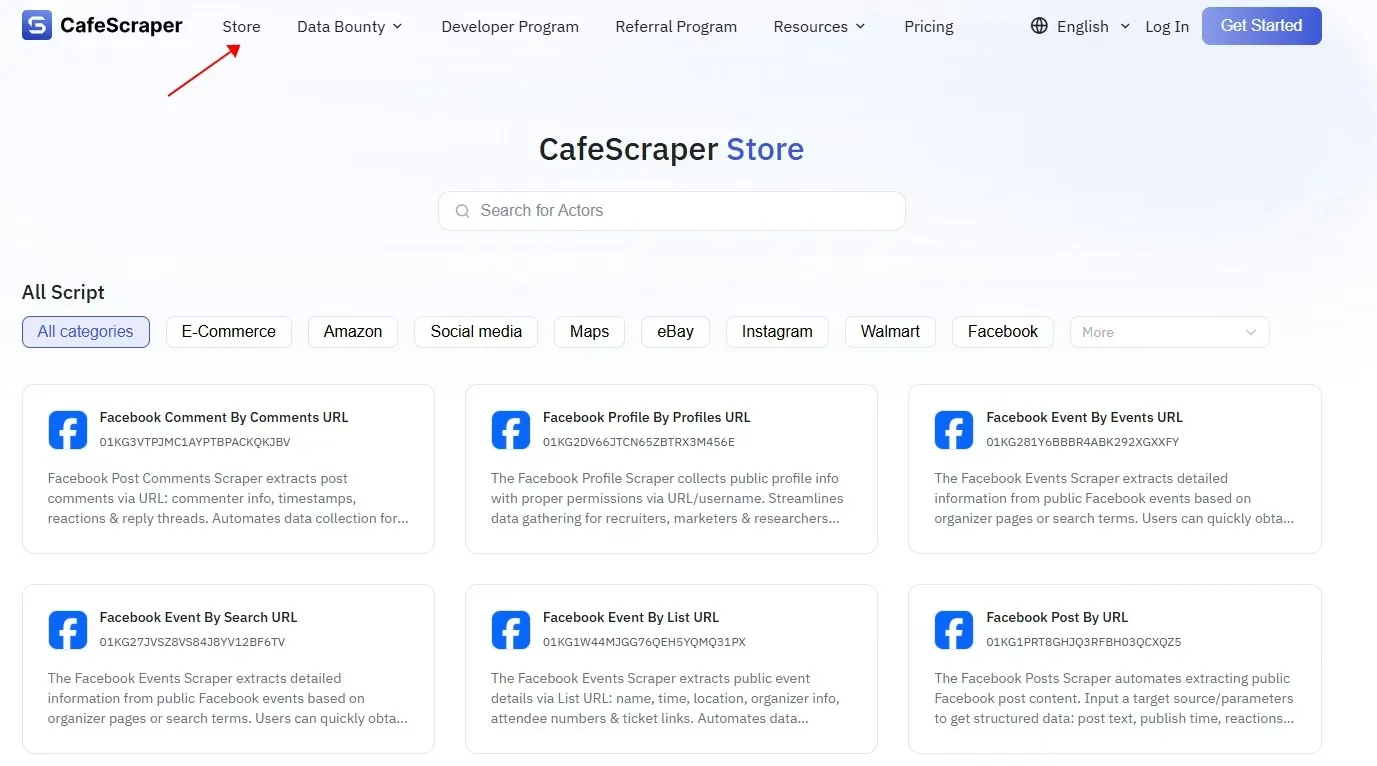
Section titled “2.1 Access the Template Store”Users visit the official platform website and navigate to the Template Store page via the navigation bar or related entry points.
2.2 Browse Script Categories
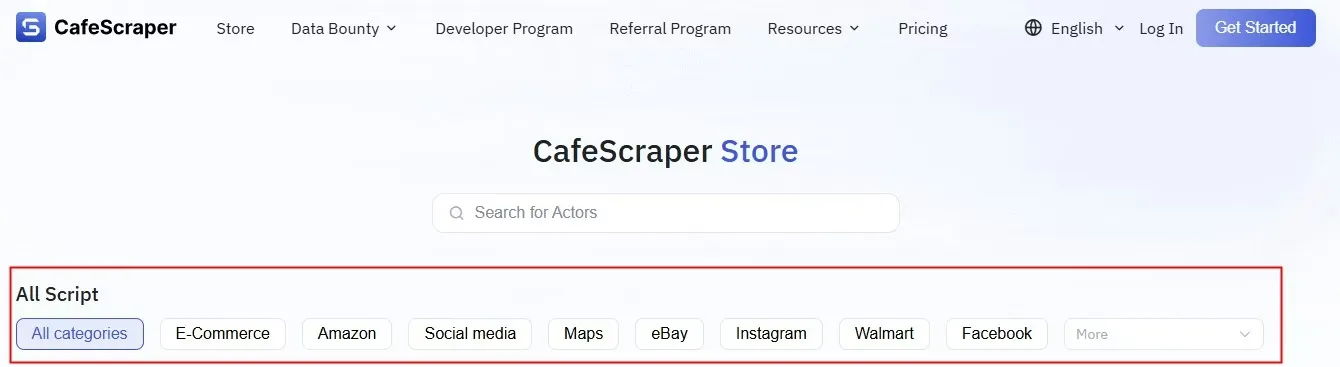
Section titled “2.2 Browse Script Categories”On the Template Store page, scripts are typically organized by functionality or application scenarios, such as:
- Website data collection
- Search engines
- E-commerce platforms
- Social media
- General-purpose data collection tools
Users can quickly browse scripts of a specific type by selecting a category.
2.3 Script Search (Fuzzy Search)
Section titled “2.3 Script Search (Fuzzy Search)”The Template Store supports script search via the search box, including:
- Fuzzy search by script name
- Fuzzy search by script description / keywords
After entering keywords, the system automatically matches and displays relevant scripts.
3. Finding Scripts via the Console Template Menu
Section titled “3. Finding Scripts via the Console Template Menu”3.1 Access the Template Page
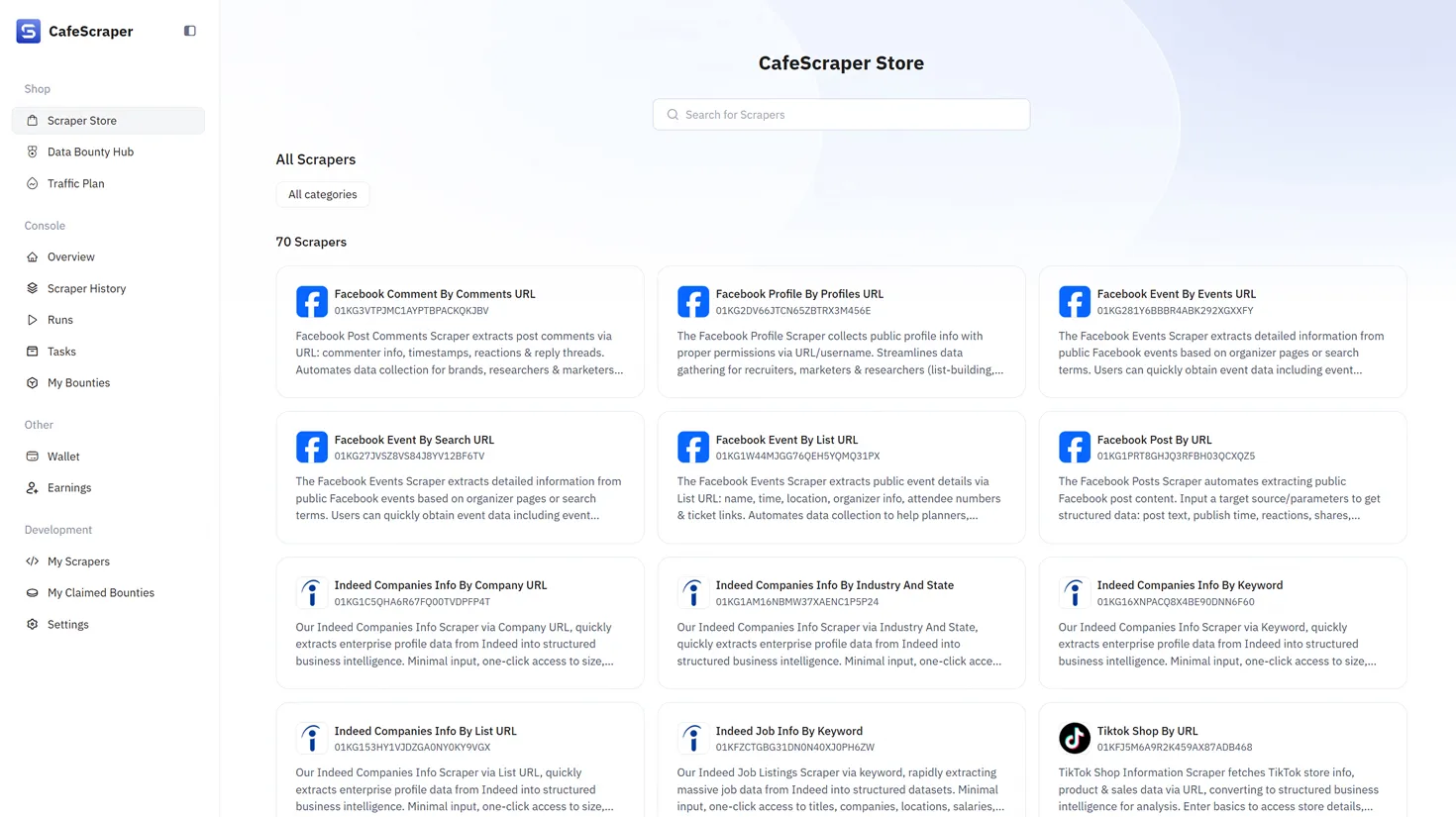
Section titled “3.1 Access the Template Page”After logging in to the console, click Template in the left-side menu to enter the script management page.
3.2 View the Script List
Section titled “3.2 View the Script List”On the Template page, users can view all available scripts provided by the platform, including:
- Script name
- Script summary
- Script status
- Supported features
3.3 Script Search (Fuzzy Search)
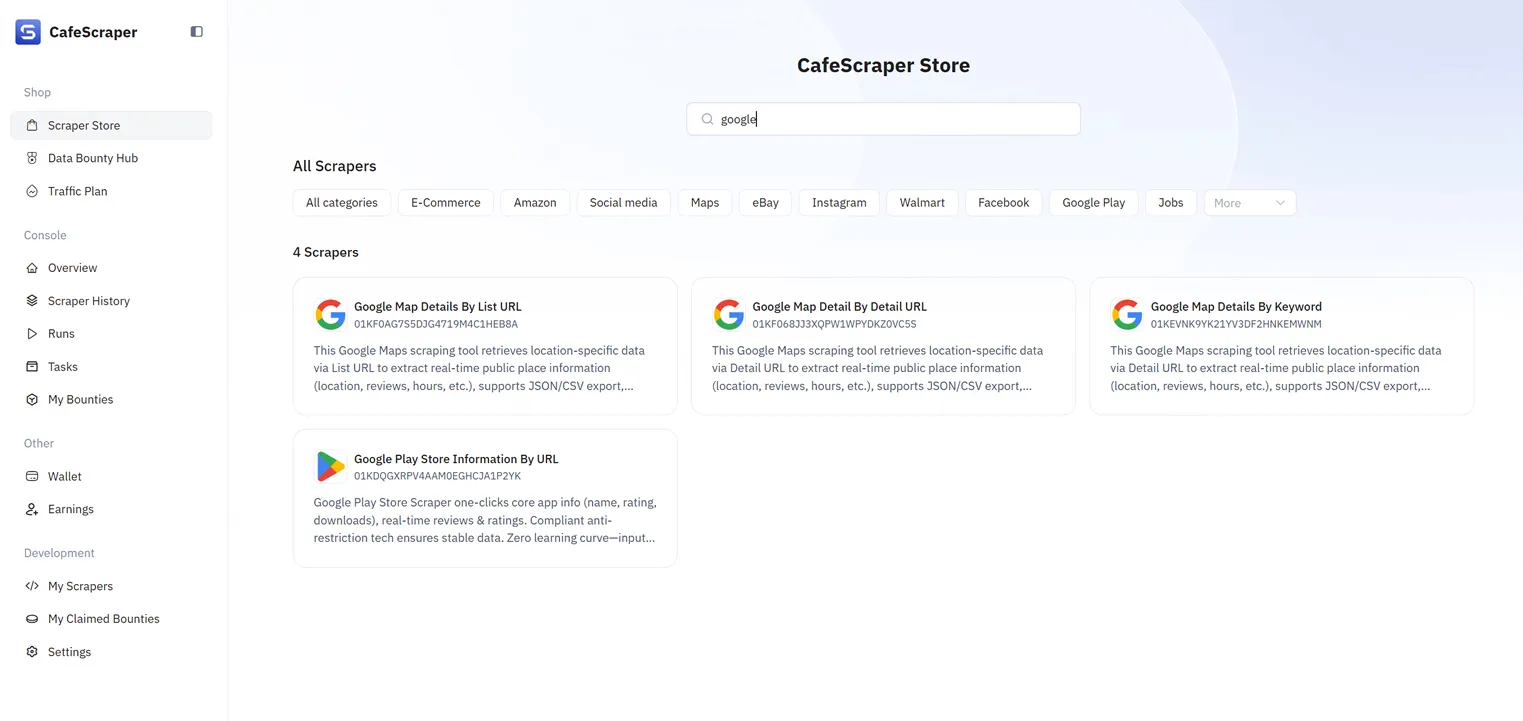
Section titled “3.3 Script Search (Fuzzy Search)”The Template page also supports search functionality, including:
- Fuzzy search by script name
- Fuzzy search by script content / description keywords
Search results are updated in real time, helping users quickly locate the desired script.
4. Viewing Script Details
Section titled “4. Viewing Script Details”Whether in the Template Store or the Console Template page, users can click any script to access its detail page, where they can review:
- Script functionality description
- Supported use cases
- Required input parameters
- Output data structure
- Usage examples
Users can determine whether a script meets their data collection requirements based on the details provided.